How to Know When Your Garage Floor Needs Recoating
A professionally coated garage floor can provide years of service,
but no floor coating stays new forever.
Vehicle traffic, hot tires, dirt, sand, chemicals, sunlight,
moisture, and everyday use can gradually affect the surface. Eventually,
you may start wondering:
Does my garage floor need to be recoated, repaired, or
completely replaced?
The answer depends on what you’re seeing.
Minor scratches or a loss of shine may only indicate normal surface
wear. Peeling, bubbling, widespread delamination, or recurring cracks
can point to deeper problems that shouldn’t simply be covered with
another coat.
Here are the most common signs your garage floor may need
attention—and how to tell whether recoating is the right solution.
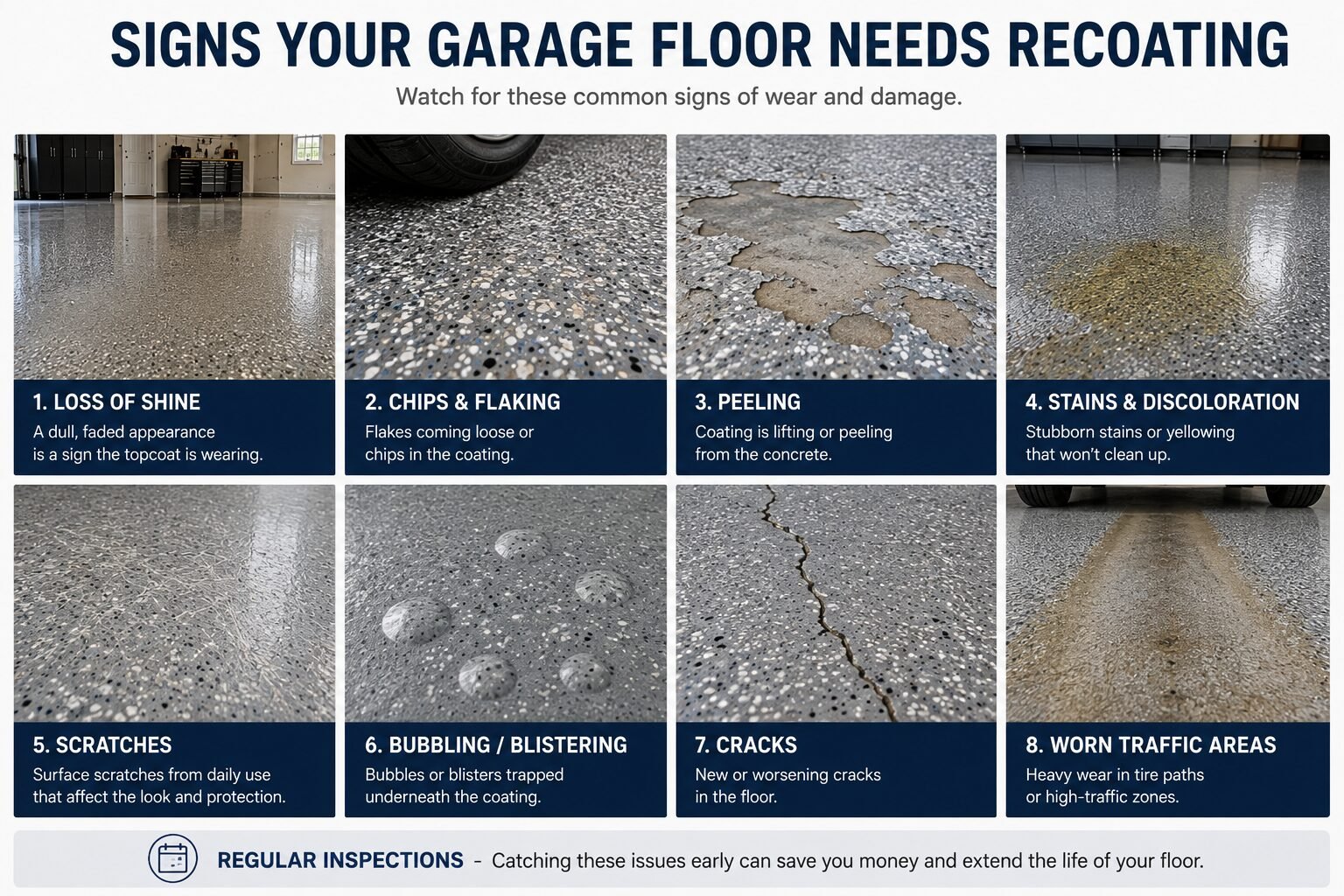
1. The Floor Has Lost Its
Shine
One of the first changes homeowners notice is a duller
appearance.
A garage floor that was once glossy may gradually lose some of its
shine due to:
- Vehicle traffic
- Dirt and sand
- Repeated cleaning
- Abrasion
- Rolling equipment
- Everyday foot traffic
Loss of gloss doesn’t necessarily mean the entire coating system has
failed.
If the underlying coating remains firmly bonded and otherwise in good
condition, refreshing the surface may be possible depending on the
existing system.
Before recoating, however, the floor should be cleaned, inspected,
and appropriately prepared.
2. You Can See Worn Traffic
Areas
Look closely at where your vehicle tires normally travel and
park.
These areas often receive significantly more wear than the edges of
the garage.
You may notice that certain sections look:
- Duller
- Smoother
- More scratched
- Slightly discolored
- More worn than surrounding areas
Localized wear doesn’t automatically mean the entire floor needs
replacement.
But increasing wear can be a good reason to have the coating
evaluated before damage progresses further.
3. There Are Lots of
Scratches
A few minor scratches are normal on a working garage floor.
Garages regularly contain:
- Vehicles
- Toolboxes
- Bicycles
- Lawn equipment
- Storage containers
- Workbenches
- Heavy equipment
Over time, these items can leave marks.
If scratches are mostly superficial, recoating may help refresh the
appearance after appropriate surface preparation.
Deep gouges that extend through the coating to the concrete are
different. Those areas may need individual repair before another coating
is installed.
4. The Color Has Changed or
Faded
Garage floor coatings can experience appearance changes over
time.
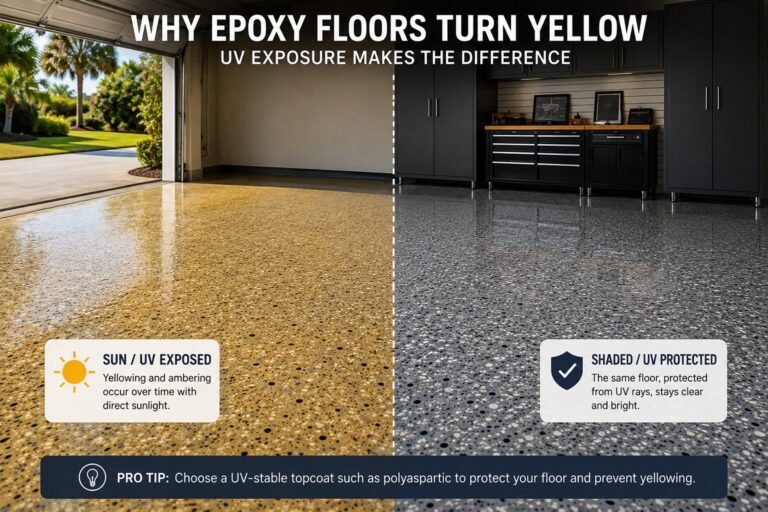
One common factor is sunlight.
The area immediately inside a garage door can receive regular UV
exposure, while the back of the garage receives little or none.
This can create visible differences between sections of the
floor.
Depending on the products used, you might notice:
- Fading
- Yellowing
- Uneven coloration
- Differences between exposed and shaded areas
If the problem is primarily cosmetic and the existing floor remains
securely bonded, recoating with an appropriate compatible system may be
an option.
5. The Topcoat Is Wearing
Away
Many professional garage flooring systems contain multiple
layers.
The visible wear may therefore affect the upper layer before the
entire flooring system has failed.
If the protective topcoat is becoming noticeably worn, refreshing it
at the appropriate time may help protect the layers underneath.
Waiting until wear reaches the concrete can turn a relatively
straightforward maintenance project into a more extensive repair.
6. The Floor Is
Becoming Harder to Clean
A coated garage floor should generally be easier to clean than
unfinished porous concrete.
If your floor suddenly seems to hold dirt or stains more easily than
it once did, surface wear may be contributing.
An older surface can develop:
- Fine scratches
- Worn areas
- Damaged coating
- Changes in texture
These conditions can make dirt more noticeable or harder to
remove.
Before assuming the floor needs recoating, make sure the problem
isn’t simply cleaning-product residue.
Soap and other cleaners can sometimes leave a film behind.
7. Decorative Flakes
Are Becoming Exposed
Decorative flake floors typically have a protective clear layer over
the flakes.
If that protective surface wears significantly, the floor may begin
to feel different or the flakes may appear increasingly exposed.
That’s worth investigating.
The goal is to address excessive surface wear before the decorative
system underneath experiences unnecessary damage.
8. You See Small
Chips or Localized Damage
Dropped tools, heavy equipment, sharp objects, or impacts can
occasionally chip a garage floor coating.
One small chip doesn’t mean you need to replace the entire floor.
Localized damage may sometimes be repairable.
However, several damaged areas or chips that continue spreading can
indicate that more extensive maintenance is appropriate.
It’s also important to determine whether the damage resulted from
impact or poor adhesion.
Those require different solutions.
9. Tire Areas Are Showing
Damage
Pay special attention underneath your vehicle tires.
Warm tires place concentrated pressure on the coating where vehicles
are parked.
If you notice coating material lifting or sticking to tires, you may
be dealing with hot tire pickup.
This shouldn’t automatically be treated as normal surface wear.
Hot tire pickup can be associated with:
- Weak adhesion
- Inadequate surface preparation
- Unsuitable coating
- Premature vehicle traffic
- Other installation problems
Before recoating, determine why the original coating failed.
Otherwise, the same problem may happen again.
10. The Floor Is Peeling
Peeling is more serious than a loss of shine.
If coating material is separating from the concrete, simply putting
another layer over the top isn’t a reliable solution.
The new coating would be attached to a layer that is already
failing.
Peeling can be associated with:
- Poor concrete preparation
- Contamination
- Moisture
- Weak existing coatings
- Installation problems
Loose material generally needs to be removed, and the underlying
cause should be investigated before another coating system is
installed.
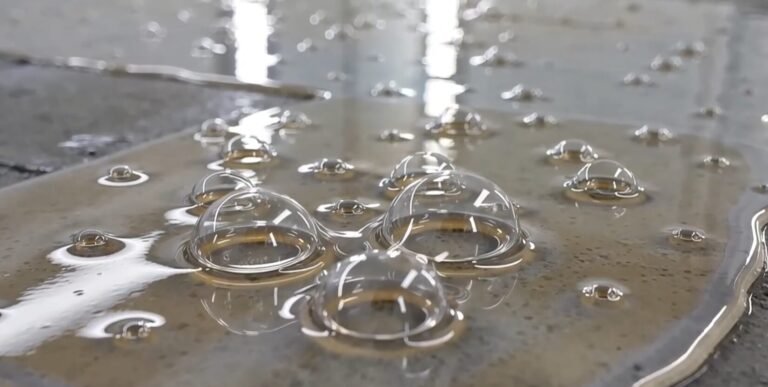
11. Bubbles or Blisters
Are Appearing
Bubbles and blisters deserve attention.
They may result from issues such as:
- Moisture vapor
- Outgassing
- Poor adhesion
- Contamination
- Application conditions
If a floor has widespread blistering, don’t simply sand the tops off
and cover everything with another coat.
Determine what’s causing the problem first.
Recoating a floor without addressing an underlying moisture or
adhesion issue may only hide the problem temporarily.
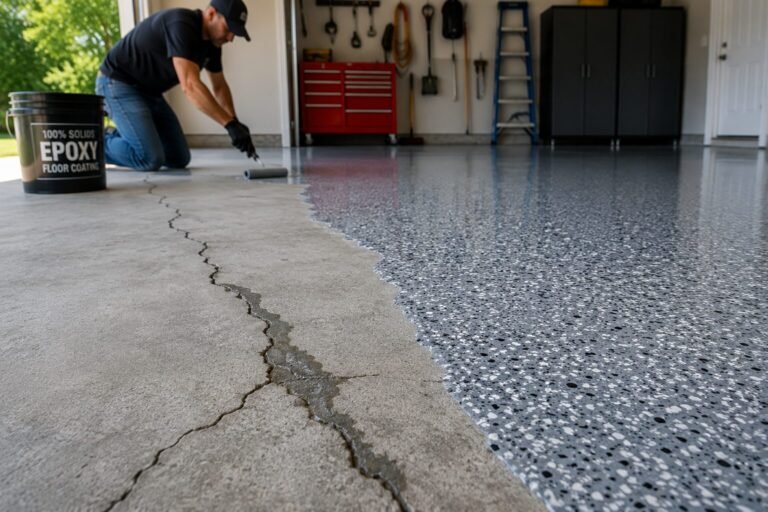
12. Cracks Are
Appearing Through the Coating
Concrete can crack underneath a garage floor coating. Our guide explains when a cracked garage floor can be coated.
If the slab moves, an existing crack can sometimes become visible
through the finished floor.
Small, stable cracks may potentially be repaired as part of a
recoating project.
However, cracks that are:
- Getting wider
- Repeatedly returning
- Showing vertical displacement
- Associated with significant slab movement
may need additional evaluation.
A decorative coating shouldn’t be expected to correct structural
movement in concrete.
Recoating
vs. Repairing vs. Replacing: What’s the Difference?
These terms shouldn’t be used interchangeably.
Recoating
Recoating generally means preparing a sound existing coating and
applying a compatible new layer or system over it.
This can make sense when the existing floor is still securely bonded
but has experienced surface wear or cosmetic deterioration.
Repairing
Repairing addresses localized problems such as:
- Chips
- Gouges
- Certain cracks
- Small damaged sections
Repairs may be performed before a larger recoating project.
Replacing the Coating
If substantial portions of the existing coating are peeling or
delaminating, removal and installation of a new system may be
necessary.
Applying new material over widespread coating failure doesn’t correct
the weak layer underneath.
Can You Just Apply
New Epoxy Over Old Epoxy?
Sometimes—but not without proper preparation.
A new coating needs a suitable surface to bond to.
An existing epoxy floor may require:
- Thorough cleaning
- Removal of contaminants
- Inspection for loose or failing areas
- Repairs where appropriate
- Mechanical surface preparation
- Application of a compatible coating system
The exact process depends on the products already on the floor and
the new system being installed.
Don’t assume that new epoxy will securely bond to an old glossy
coating simply because both products are called epoxy.
How Often Should a
Garage Floor Be Recoated?
There isn’t a universal schedule. The expected lifespan of epoxy flooring depends on the complete system and how the floor is used.
You may see recommendations online suggesting recoating every
specific number of years, but actual wear varies enormously.
A lightly used residential garage may age very differently from a
garage that handles:
- Multiple vehicles every day
- Heavy tools
- Frequent mechanical work
- Sand and dirt
- Chemicals
- Direct sunlight
- Rolling equipment
Instead of recoating solely because a certain number of years has
passed, evaluate the actual condition of the floor.
A floor that’s still performing well doesn’t necessarily need to be
disturbed just because it has reached an arbitrary age.
Can
Recoating Make an Old Garage Floor Look New Again?
If the existing coating is structurally sound, recoating can
potentially refresh its appearance.
Depending on the system, homeowners may also have an opportunity to
change aspects of the floor’s appearance.
However, a new top layer can’t correct major problems underneath
it.
Think of recoating as maintenance for a sound floor—not a shortcut
for covering a failing one.
Should You
Recoat Before the Floor Completely Fails?
In many situations, addressing surface wear before extensive damage
occurs makes sense.
If a protective layer is wearing but the underlying system remains
securely bonded, maintenance may be simpler than waiting until the
concrete becomes exposed.
The key is recognizing the difference between normal wear and
coating failure.
Normal wear may be a candidate for maintenance.
Peeling, widespread blistering, and delamination require
investigation.
How Is
an Existing Garage Floor Prepared for Recoating?
Preparation is just as important when recoating as it was during the
original installation.
The existing surface may need to be mechanically abraded or otherwise
prepared according to the new coating system’s requirements.
This can help:
- Remove weak material
- Remove certain contaminants
- Create a suitable surface for adhesion
- Identify areas requiring repair
Simply cleaning the floor and rolling another layer over a glossy
existing coating may not provide reliable adhesion.
How to Help Your
Garage Floor Last Longer
Good maintenance can help reduce unnecessary wear.
Sweep Regularly
Remove dirt, sand, and grit before vehicles repeatedly grind them
against the surface.
Clean Spills Promptly
Oil, automotive fluids, and chemicals shouldn’t be left sitting on
the floor unnecessarily.
Avoid Dragging Heavy Objects
Lift or appropriately move heavy equipment rather than dragging sharp
metal edges across the coating.
Use Appropriate Cleaning
Products
Follow maintenance recommendations for your particular floor
system.
Avoid leaving heavy soap residue on the surface.
Watch High-Traffic Areas
Check vehicle paths and parking areas periodically for signs of
excessive wear.
Catching problems early can make them easier to address.
Garage Floor
Recoating in Coastal South Carolina
Garages in Charleston and the surrounding Lowcountry can experience
demanding conditions.
Heat, humidity, sand, wet vehicles, sunlight near garage entrances,
and everyday traffic can all contribute to gradual wear.
Sand is particularly worth paying attention to.
Small abrasive particles brought into the garage can repeatedly move
underneath vehicle tires and footwear.
Regular cleaning is a simple way to help reduce that abrasion.
Coastal homeowners should also watch areas exposed to direct sunlight
and sections where wet vehicles regularly park.
Frequently Asked Questions
How do I know
if my epoxy floor needs recoating?
Look for significant loss of gloss, worn traffic areas, excessive
scratching, fading, or deterioration of the protective surface. Peeling,
bubbling, and widespread delamination may indicate a deeper problem
rather than routine recoating needs.
Can you recoat an old
epoxy garage floor?
Potentially. The existing coating must be evaluated for adhesion,
contamination, damage, and compatibility before another coating is
applied.
Do you
have to grind an epoxy floor before recoating?
An existing coating generally requires appropriate surface
preparation before recoating. The exact mechanical preparation depends
on the existing floor and new coating system.
Can you
change the color when recoating a garage floor?
Often, depending on the existing floor and new system. Changing
colors may require additional coating layers or preparation to achieve
the desired result.
Should I recoat if
my epoxy floor is peeling?
Don’t simply cover peeling areas. Peeling indicates that the existing
coating has lost adhesion somewhere in the system. The failed material
and underlying cause should be addressed first.
Is fading
enough reason to replace an epoxy floor?
Not necessarily. If the coating remains securely bonded and the issue
is primarily cosmetic, a compatible recoating solution may be
possible.
How
long does an epoxy garage floor last before recoating?
There is no single timeline. Installation quality, concrete
preparation, coating system, vehicle traffic, abrasion, UV exposure,
maintenance, and other conditions all affect how quickly a floor
wears.
Don’t Wait
for Your Garage Floor to Completely Fail
A garage floor doesn’t need to look brand new forever to still be
performing properly.
Minor scratches, reduced gloss, and gradual surface wear can simply
be signs of normal use.
The warning signs that deserve more attention are peeling,
widespread blistering, delamination, deep damage, recurring cracks, or
areas where the coating has lost its bond to the concrete.
If your floor is still securely bonded but beginning to show
substantial surface wear, recoating may help refresh and protect it
before more extensive work becomes necessary.
If you’re considering garage floor recoating in Charleston,
SC, Epoxy Flooring Charleston can evaluate the existing surface
and determine whether your floor is better suited for maintenance,
localized repair, recoating, or a new coating system.
Explore our Garage Floor Coating services to learn
more about restoring and protecting your Charleston garage floor.