How to Choose an Epoxy Floor Color for Your Garage
Choosing an epoxy floor color might seem like the easiest part of
upgrading your garage—until you start looking at all the options.
Light gray, charcoal, tan, black, white, decorative flakes, solid
colors… which one will actually look best in your space?
The right epoxy garage floor color isn’t just about
personal taste. Your choice can affect how bright the garage feels, how
easily dirt and tire marks show, how well the floor complements your
home, and even how large the space appears.
If you’re planning a new garage floor, here are the most important
things to consider before choosing a color.
\n
1. Consider How You Use Your
Garage
Start with the purpose of the space.
A garage used primarily for parking has different needs than one used
as a workshop, home gym, showroom, or entertainment area.
For example:
Everyday parking: Medium gray and decorative flake
systems are practical because they can help disguise everyday dust,
dirt, and minor marks.
Workshop: Neutral medium tones can provide a clean
appearance without making every bit of debris immediately
noticeable.
Home gym: Darker gray or more distinctive color
combinations can give the garage a modern, finished feel.
Car showroom: Clean neutral tones can keep attention
on the vehicles rather than making the floor the dominant feature.
Think about function first, then narrow down the colors you like.
2. Think About the Size
of Your Garage
Floor color can change how large or small a garage feels.
Light Epoxy Colors
Light gray, beige, and similar shades reflect more available light
and can make a smaller garage feel brighter and more open.
They can work especially well in garages with limited windows or
darker walls.
Dark Epoxy Colors
Charcoal and other dark tones can create a bold, modern
appearance.
However, very dark flooring can make some small garages feel more
enclosed, particularly when the walls, cabinets, and ceiling are also
dark.
If you want a darker floor in a small garage, balancing it with
lighter walls can help.
3. Look at Your Garage’s
Lighting
Don’t choose your floor color based only on a small sample viewed
under showroom or indoor lighting.
The same color can appear different depending on:
- Natural sunlight
- LED lighting
- Warm or cool light bulbs
- Wall colors
- Cabinet colors
- Time of day
If possible, view your preferred samples inside the actual
garage.
A gray that looks perfect online could appear slightly warmer,
cooler, lighter, or darker in your space.
4. Match the Floor
With Your Garage Cabinets
If you already have permanent cabinets, shelving, workbenches, or
wall systems, use them as part of your color decision.
You don’t necessarily need everything to match.
Instead, aim for a combination that looks intentional.
For example:
Black cabinets + medium gray floor Creates a clean,
modern appearance.
White cabinets + charcoal floor Creates stronger
contrast and a contemporary look.
Wood-toned cabinets + tan or warm gray floor Can
create a warmer, more traditional garage.
Gray cabinets + gray flake flooring Provides a
coordinated neutral appearance.
Remember that cabinets can be changed relatively easily. Your garage
floor is something you’ll probably want to keep for years.
Choose accordingly.
5. Consider the Color of
Your Walls
Garage walls cover far more visual space than the floor, so they can
dramatically affect how your epoxy color appears.
A simple rule is to create some contrast.
If your walls are very light, a medium-tone floor can visually ground
the room.
If your garage has dark walls and cabinetry, a lighter floor can
prevent the space from feeling overly dark.
You don’t need an exact color match between the walls and floor.
Complementary tones usually create a more natural result.
6. Think About Dirt,
Dust, and Tire Marks
This is where practical considerations become important.
Your garage isn’t a living room.
Cars bring in:
- Dirt
- Sand
- Dust
- Water
- Leaves
- Road debris
- Tire residue
Extremely light or extremely dark solid floors may make certain types
of dirt more noticeable.
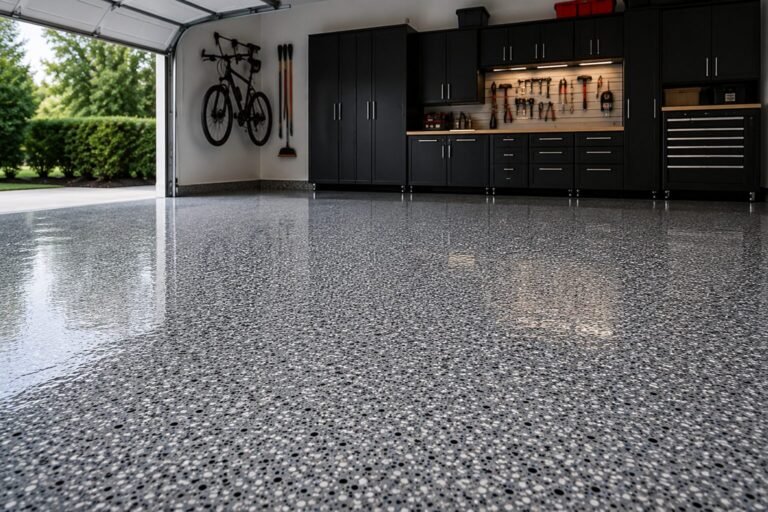
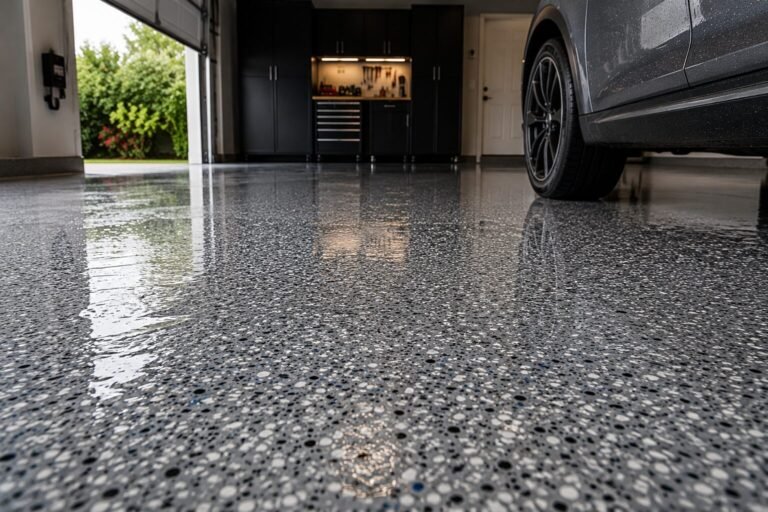
A medium-toned floor—especially one incorporating decorative
flakes—can be more forgiving for an everyday garage.
That doesn’t mean the floor stays clean automatically.
It simply means small amounts of normal debris may be less visually
obvious between cleanings.
7. Consider a
Decorative Flake Epoxy Floor
You don’t have to choose one solid color.
Decorative flake flooring is extremely popular for residential
garages because it combines multiple colors and creates visual
texture.
Flakes can include combinations of:
- Gray
- White
- Black
- Charcoal
- Tan
- Brown
- Blue
- Other accent colors
The final appearance depends on the base coat, flake blend, coverage
level, and topcoat.
Why Choose Decorative Flakes?
Besides appearance, flakes can help visually disguise:
- Small amounts of dust
- Minor surface imperfections
- Light debris
- Everyday wear
They also give the floor more visual depth than a plain solid
color.
For homeowners who aren’t sure which solid color to choose, a neutral
gray or tan flake combination is often worth considering.
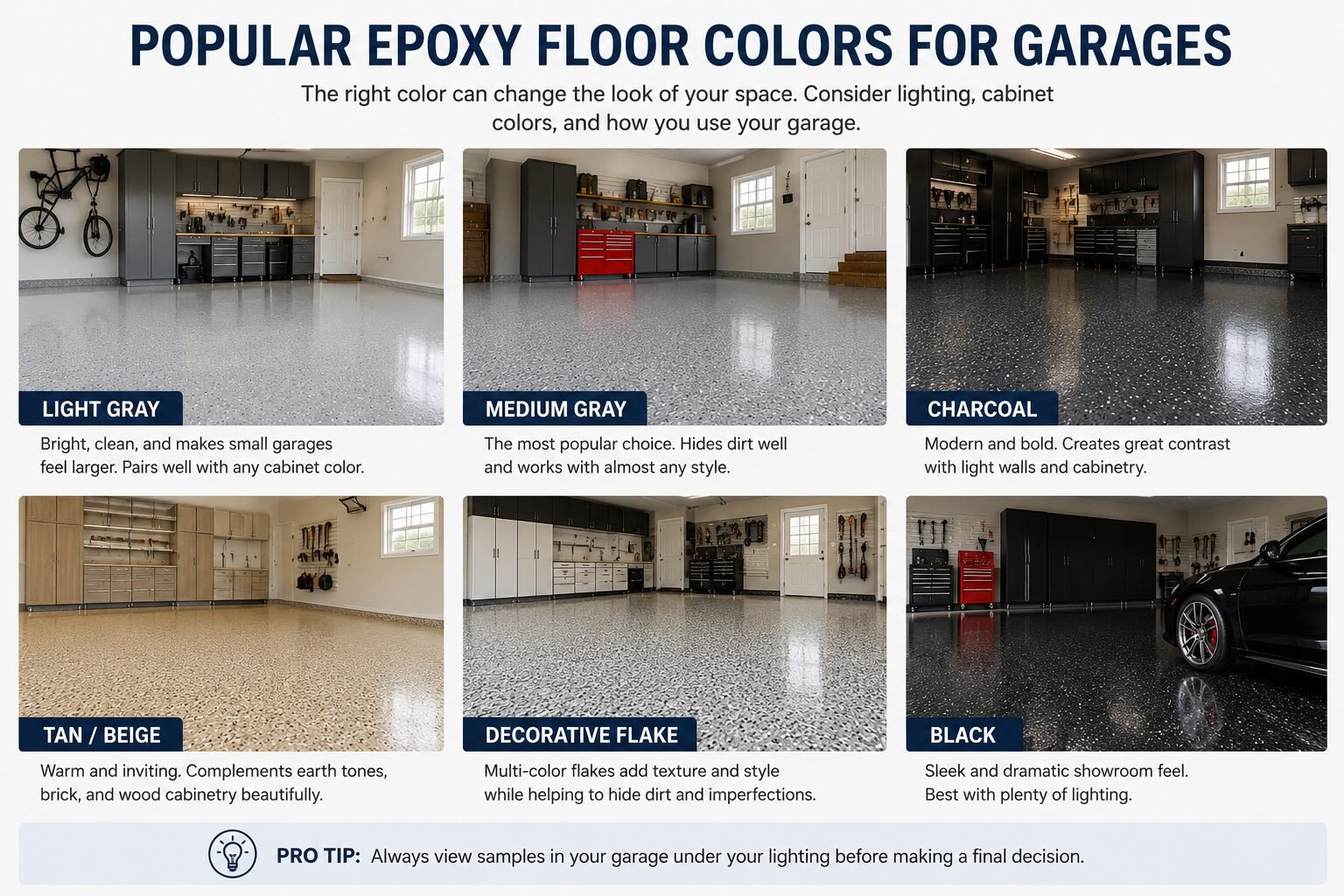
8. Light Gray Epoxy Garage
Floors
Light gray is one of the most versatile options.
It can make a garage look:
- Bright
- Clean
- Modern
- Larger
- Neutral
Light gray also pairs easily with black, white, blue, red, or
wood-toned garage cabinets.
The tradeoff is that some dirt and dark tire residue may be more
visible than on a medium-tone decorative floor.
9. Dark Gray and Charcoal
Epoxy Floors
Charcoal provides a stronger, more dramatic appearance.
It can look especially good in garages with:
- White walls
- Bright lighting
- Black cabinets
- Modern storage systems
- Performance or luxury vehicles
Keep lighting in mind.
A dark floor in a poorly lit garage can make the space feel
considerably darker.
10. Tan and Beige Epoxy
Floors
Not every garage needs to be gray.
Tan, beige, and warmer neutral combinations can complement homes with
warm exterior and interior finishes.
They can work particularly well with:
- Brown cabinetry
- Natural wood
- Beige walls
- Warm-colored brick
- Traditional home designs
A tan decorative flake system can also hide certain types of dirt
better than a very light solid floor.
11. What About Black
Epoxy Garage Floors?
Black can look impressive in the right garage, but it requires some
thought.
A glossy black floor can create a high-end showroom appearance,
especially when combined with bright walls and excellent lighting.
However, black may make certain dust, scratches, footprints, and
light-colored debris easier to see.
It also absorbs more visual light than lighter colors.
For homeowners who like the dark look but want something more
forgiving, charcoal or a dark decorative flake blend may be a practical
alternative.
12. What About White
Epoxy Garage Floors?
White floors can create an extremely bright and clean appearance.
They’re particularly striking in showroom-style garages.
For an everyday residential garage, however, a very light solid
surface can make tire marks, dirt, and debris more noticeable.
An off-white, light gray, or light decorative flake system can
provide a similar bright aesthetic while offering more visual
variation.
13. Don’t Choose Based on
Trends Alone
Garage design trends change.
A bold color combination that looks exciting today may not be
something you want several years from now.
If longevity matters to you, neutral colors are generally easier to
coordinate with future changes to:
- Cars
- Cabinets
- Wall colors
- Storage systems
- Workbenches
- Garage doors
You can always add personality through cabinets, wall graphics,
lighting, or accessories.
Replacing a floor because you’re tired of an unusual color is
considerably more involved.
14. Look at Real
Samples Before Deciding
Online photos are useful for inspiration, but screens don’t always
reproduce colors accurately.
Brightness, camera settings, editing, lighting, and your display can
all change how a floor appears.
Whenever possible, look at physical samples or examples of completed
floors.
Pay particular attention to decorative flake blends.
A tiny sample containing five or six flakes can look quite different
when that same combination covers an entire two-car garage.
15. Consider Your Home’s
Overall Style
Your garage doesn’t have to look completely separate from the rest of
your property.
Consider your home’s:
- Exterior color
- Trim
- Garage doors
- Interior design
- Architectural style
A modern home may pair naturally with cool grays and charcoal.
A traditional home may work nicely with warmer gray, beige, or tan
combinations.
There’s no universal rule—the goal is simply to make the finished
garage feel intentional.
What Is the Best
Epoxy Color for a Garage?
There isn’t one color that’s best for every garage.
For many homeowners, however, medium gray or neutral
decorative flake combinations offer a strong balance between appearance
and practicality.
They’re versatile, coordinate with many cabinet and wall colors, and
generally provide enough visual variation to keep everyday dust and
debris from dominating the appearance.
If brightness is your priority, consider a lighter gray.
If you want a dramatic showroom look, charcoal may be more
appropriate.
If your home uses warmer colors, tan or beige may fit better.
Ultimately, the best color is the one that fits both your
garage’s design and how you actually use the space.
Frequently Asked Questions
What is the
most popular epoxy garage floor color?
Gray-based floors and neutral decorative flake combinations are
commonly chosen because they’re versatile and work with many garage
styles. However, available colors and popular combinations vary by
coating system and installer.
Do dark epoxy floors show
dirt?
They can. Dark floors may make light-colored dust, sand, and certain
debris more noticeable. Medium-tone decorative floors tend to provide
more visual variation.
What epoxy
floor color makes a garage look bigger?
Lighter colors such as light gray and beige can reflect more
available light and may make a garage feel brighter and more
spacious.
Should my garage floor
match my cabinets?
It doesn’t have to match exactly. Complementary colors or intentional
contrast can often produce a better result than trying to make
everything the same shade.
Are epoxy flakes
better than a solid color?
Neither is automatically better. Decorative flakes provide a
different appearance and can help visually disguise everyday dirt and
minor imperfections, while solid colors provide a cleaner, more uniform
look.
Will my epoxy floor color
fade?
Color stability depends on the products used and the amount of UV
exposure the floor receives. Epoxy itself can experience appearance
changes from prolonged sunlight, which is why the complete coating
system and topcoat selection matter in areas exposed to UV.
Choosing
an Epoxy Garage Floor Color in Charleston, SC
Choosing your garage floor color should be fun, but appearance
shouldn’t be the only consideration.
A beautiful floor still needs proper concrete preparation and a
coating system suitable for garage conditions.
For homeowners in Charleston, Mount Pleasant, Summerville, and
surrounding areas, consider your garage’s lighting, size, existing
finishes, everyday use, and maintenance preferences before making the
final choice.
Whether you prefer a subtle gray floor, a decorative flake system, or
something darker and more dramatic, the goal is to create a garage that
looks good while still being practical for everyday life.
If you’re considering a garage floor coating in Charleston,
SC, Epoxy Flooring Charleston can help you explore color and
finish options that complement your space.
Explore our Garage Floor Coating services to learn
more about upgrading your garage with a professionally prepared and
finished floor.