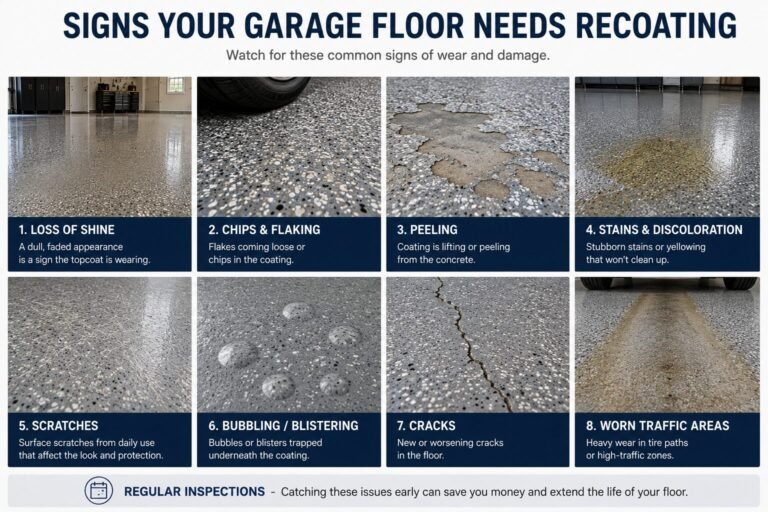
What Causes Bubbles and Blisters in Epoxy Flooring?
A smooth epoxy floor should have a consistent, even finish. So when
small bubbles, raised spots, pinholes, or larger blisters start
appearing, it’s natural to wonder what went wrong.
Bubbles and blisters in epoxy flooring can develop for
several reasons, including air escaping from the concrete,
moisture vapor, improper mixing, unsuitable application conditions, and
problems with surface preparation.
Some defects appear while the epoxy is being installed. Others don’t
become noticeable until days, weeks, or even months later.
Understanding the difference is important because simply sanding down
a bubble and covering it with more epoxy won’t necessarily solve the
underlying problem.
Here’s what causes epoxy flooring to bubble or blister, how to
identify the likely source, and what can be done to prevent it.
What’s
the Difference Between Epoxy Bubbles and Blisters?
Although the terms are sometimes used interchangeably, bubbles and
blisters can describe different types of coating defects.
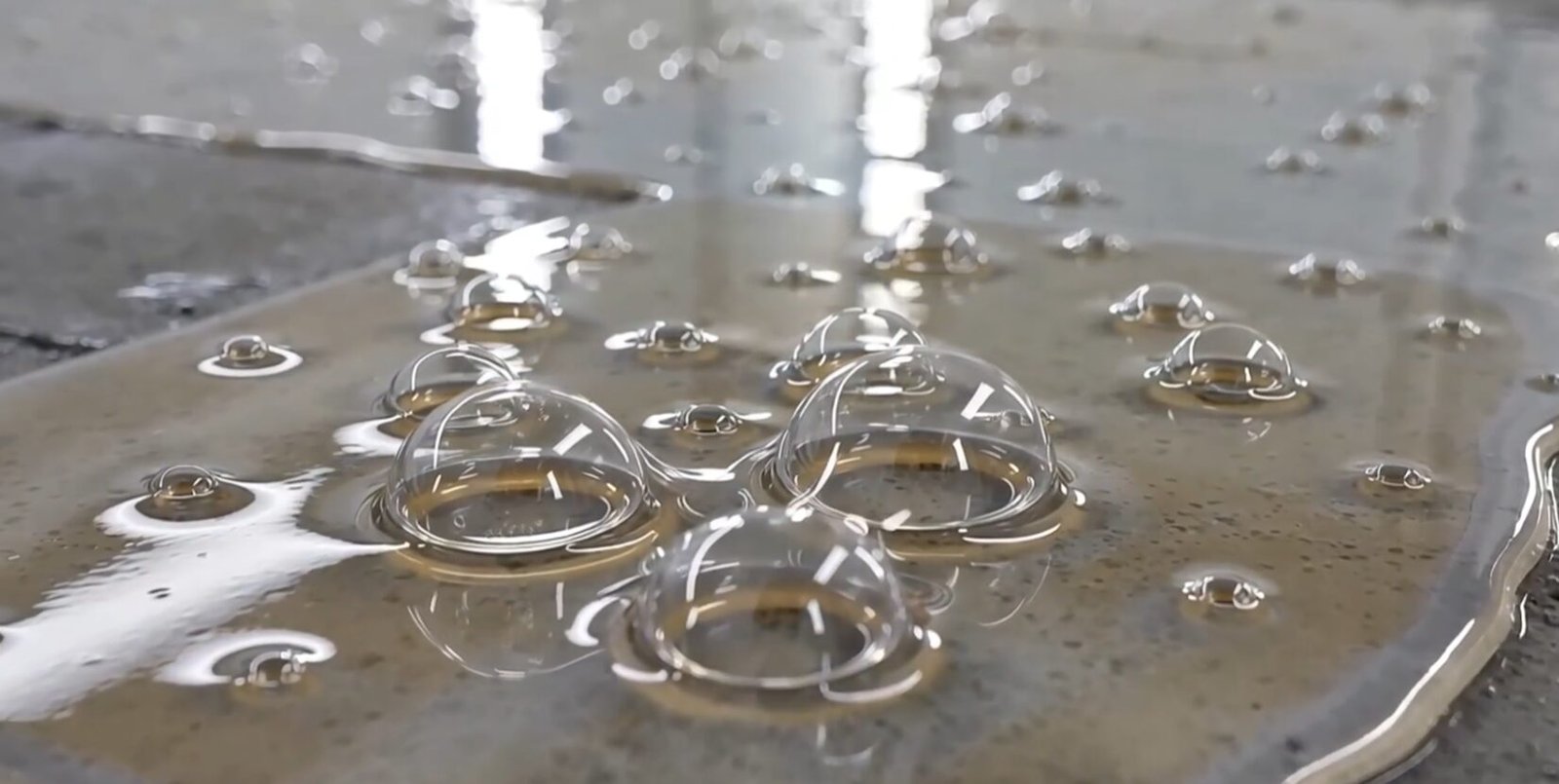
Bubbles
Bubbles are often small pockets of air or gas trapped within or
underneath the coating.
They may appear during application or shortly afterward. In some
cases, bubbles break open and leave small holes in the finished
surface.
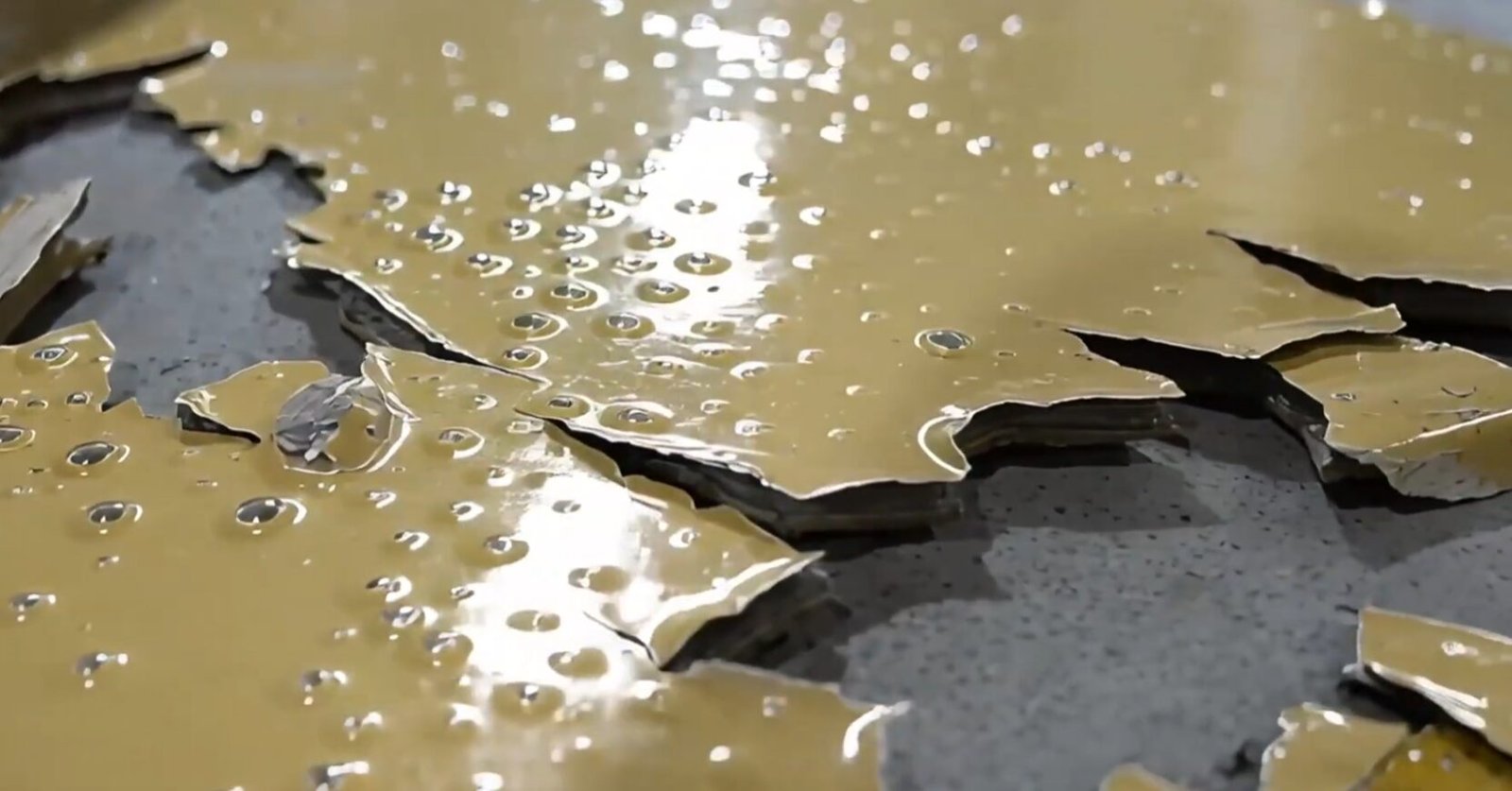
Blisters
Blisters are typically raised sections where the coating has
separated from the surface underneath.
They can range from small bumps to much larger areas of
delamination.
Moisture, poor adhesion, contamination, or other substrate problems
can contribute to blistering.
The appearance alone doesn’t always reveal the exact cause, so the
surrounding conditions should also be considered.
1. Air Escaping From Porous
Concrete
Concrete contains tiny pores and air spaces.
When environmental conditions cause air within the concrete to
expand, it can move toward the surface. If a fresh coating has already
been applied, that escaping air may travel through the wet epoxy.
This process is commonly referred to as
outgassing.
If the epoxy begins setting before the air can escape completely,
bubbles or pinholes may remain in the finished coating.
What Does Outgassing Look
Like?
You may notice:
- Tiny bubbles in fresh epoxy
- Small pinholes
- Crater-like imperfections
- Clusters of bubbles in certain sections
- An uneven surface after curing
Outgassing is one reason application conditions and timing matter
when installing epoxy over concrete.
2. Moisture Vapor
Coming Through the Concrete
Moisture is a more serious potential cause of epoxy blistering.
Concrete may appear dry on top while moisture vapor is still moving
through the slab.
Once a relatively impermeable coating is installed, moisture-related
pressure beneath the coating can contribute to adhesion problems or
blistering when conditions exceed what the system can tolerate.
Possible signs include:
- Raised bubbles or blisters
- Coating separation
- Peeling
- Dampness beneath failed sections
- Recurring failure after repairs
Simply applying another layer of epoxy over a moisture-related
problem may result in the same failure happening again.
When moisture is suspected, the slab and coating system should be
properly evaluated before repairs are made.
3. Improper Concrete
Surface Preparation
A durable epoxy floor depends heavily on the surface underneath
it.
Concrete may contain:
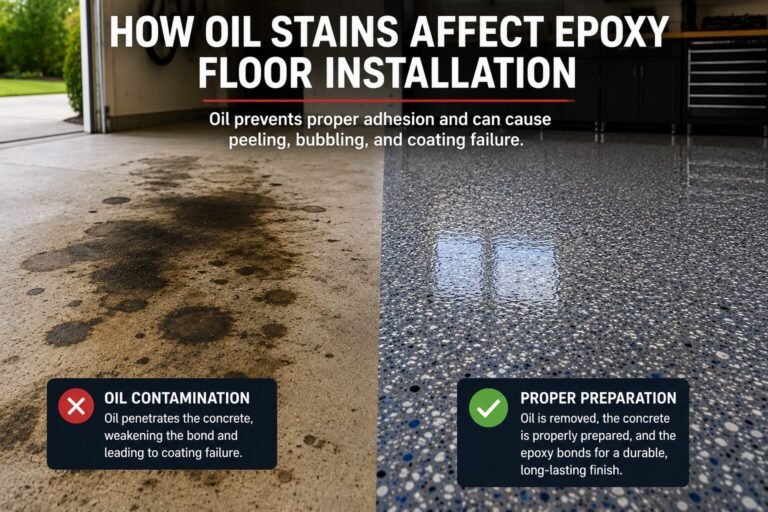
- Dirt
- Dust
- Oil
- Grease
- Existing sealers
- Old paint
- Previous coatings
- Weak surface material
If these materials aren’t appropriately addressed, the epoxy may bond
to the contaminant rather than securely to the concrete.
Over time, sections of coating can begin lifting or blistering.
Professional concrete preparation may involve mechanical methods such
as diamond grinding, depending on the condition of the
slab and requirements of the coating system.
The objective isn’t simply to make the concrete look clean. It’s to
create a suitable substrate for the coating to bond to.
4. Air Introduced While
Mixing Epoxy
Epoxy products generally involve combining components before
application.
Mixing them too aggressively can introduce unnecessary air into the
material.
Those tiny air bubbles may remain suspended in the epoxy and become
visible after it is applied.
Correct mixing technique depends on the specific product, which is
why manufacturer instructions regarding mixing speed, equipment, ratios,
and mixing time should be followed carefully.
More aggressive mixing isn’t necessarily better.
5. Applying Epoxy Too Thick
Applying more epoxy doesn’t automatically produce a stronger
floor.
Coating systems are designed to be installed within particular
thickness ranges.
If a product is applied excessively thick, trapped air may have more
difficulty escaping before the coating begins curing.
An overly thick application can also affect other aspects of the
curing process.
The recommended coverage rate and application thickness for the
specific product should therefore be followed.
6. Temperature
Changes During Installation
Temperature can influence both the concrete and the coating.
As concrete warms, air inside its pores can expand and move outward.
If fresh epoxy is on the surface at that time, the escaping air can
contribute to bubbling.
Temperature also affects how quickly many coating products react and
cure.
Extremely hot or cold conditions—or rapidly changing conditions—can
make proper application more difficult.
Professional installers should consider:
- Concrete temperature
- Air temperature
- Product temperature
- Humidity
- Expected changes during application and curing
The acceptable ranges depend on the particular coating system.
7. Contamination on the
Concrete
Oil and grease are especially common concerns in garages.
A concrete floor that has held vehicles for years may contain
contamination that extends beyond what can be removed with a quick
surface cleaning.
Other potential contaminants include:
- Automotive fluids
- Silicone
- Wax
- Sealers
- Cleaning products
- Chemicals
- Previous floor treatments
If epoxy is applied over incompatible or contaminated areas, adhesion
may be weaker in those locations.
That can eventually appear as peeling, fisheyes, craters, or blisters
depending on the specific problem.
8. Incorrect Epoxy Mixing
Ratio
Two-component coatings depend on the correct proportions of their
components.
Changing the ratio in an attempt to make epoxy cure faster or slower
can prevent the material from developing its intended properties.
Incorrect measurement or incomplete mixing may result in:
- Soft areas
- Sticky sections
- Uneven curing
- Reduced performance
- Surface defects
Always use the mixing ratio specified for the particular product.
9.
Applying Epoxy Over an Unsuitable Existing Coating
Sometimes homeowners want to refresh an older painted or coated floor
by simply applying epoxy over it.
The problem is that the new floor is only as secure as the layer
underneath it.
If the existing coating has weak adhesion, applying a new coating on
top doesn’t repair that bond.
The old coating can separate from the concrete and take the new
coating with it.
Existing floor coatings should therefore be evaluated before
recoating.
Why Did
Bubbles Appear After My Epoxy Floor Dried?
Timing can provide clues about the cause.
Bubbles that develop during application may be related to:
- Outgassing
- Mixing
- Application technique
- Environmental conditions
Blisters that appear significantly later may require investigation
for:
- Moisture
- Adhesion problems
- Contamination
- Substrate conditions
However, timing alone isn’t enough to diagnose every coating
failure.
Inspecting what’s underneath a failed section can provide valuable
information about where the separation occurred.
Can You Fix Bubbles in
Epoxy Flooring?
Often, but the correct repair depends on the cause and extent of the
problem.
A few isolated surface defects may sometimes be corrected
locally.
Widespread blistering is different.
If the coating is separating because of moisture, contamination, or
inadequate surface preparation, simply sanding the tops off the blisters
and adding another coat may only provide a temporary cosmetic fix.
A proper repair generally starts by determining:
- Where the coating lost adhesion
- Whether moisture is involved
- Whether the concrete was properly prepared
- Whether contamination is present
- How much of the existing coating remains securely bonded
Only then should the appropriate repair approach be selected.
Should You Pop Epoxy
Blisters?
Popping a blister may reveal what’s underneath, but it doesn’t repair
the cause.
If a blister is opened and another layer of epoxy is simply placed
over it, the problem may return if moisture, contamination, or poor
adhesion remains.
For multiple or recurring blisters, it’s better to investigate the
underlying failure before attempting cosmetic repairs.
How to
Prevent Bubbles and Blisters in Epoxy Floors
Prevention starts before the coating is poured.
Prepare the Concrete
Properly
The slab should be clean, sound, and prepared according to the
coating system’s requirements.
Mechanical surface preparation may be appropriate for many
professional installations.
Evaluate Moisture Concerns
If there are reasons to suspect excessive moisture, they should be
investigated before coating the floor.
Follow the Correct
Mixing Instructions
Measure components accurately and use the mixing procedure
recommended by the manufacturer.
Apply the Correct Thickness
Follow the product’s specified coverage rate rather than assuming
thicker is always better.
Monitor Installation
Conditions
Temperature and humidity requirements should be respected throughout
application and curing.
Allow Proper Cure Time
Don’t expose the coating to vehicles, water, chemicals, or heavy use
earlier than recommended.
Are Small Bubbles in Epoxy
Normal?
A few isolated surface imperfections don’t necessarily mean the
entire floor has failed.
However, widespread bubbles, recurring blisters, or areas where the
coating is separating from the concrete shouldn’t be ignored.
The important distinction is whether you’re dealing with a cosmetic
imperfection or an adhesion problem.
If the coating underneath remains firmly bonded, the repair may be
relatively minor.
If large areas are separating from the concrete, the underlying cause
needs to be addressed.
Epoxy Blistering in Garage
Floors
Garages can be particularly demanding environments for coatings.
Garage floors may be exposed to:
- Moisture
- Vehicle traffic
- Hot tires
- Oil and automotive fluids
- Dirt and sand
- Temperature fluctuations
- Previous concrete sealers or treatments
That’s why garage floor installation should begin with an evaluation
of the existing concrete rather than simply applying epoxy over whatever
surface is already there.
Proper preparation can help reduce preventable adhesion and surface
problems later.
Epoxy Flooring
Problems in Charleston, SC
Charleston’s warm, humid climate makes careful concrete evaluation
and installation especially important.
Humidity by itself doesn’t mean an epoxy floor will blister, but
environmental conditions, slab moisture, concrete condition, and
application requirements all need to be considered when installing a
coating.
For Charleston homeowners, a long-lasting floor starts with
understanding the concrete underneath it.
Preparation, product selection, application conditions, and curing
all contribute to the final result.
Frequently Asked Questions
Why does my epoxy
floor have tiny bubbles?
Tiny bubbles can be caused by air introduced during mixing, air
escaping from porous concrete, application conditions, or other
installation factors. Examining when and where the bubbles developed can
help identify the likely cause.
What causes large
blisters under epoxy?
Large blisters can be associated with moisture, poor adhesion,
contamination, or substrate-related problems. The coating should be
inspected to determine where and why separation occurred.
Will epoxy bubbles
disappear while curing?
Some air may escape while the material remains workable, but you
shouldn’t assume visible bubbles will automatically disappear. Once the
coating cures around them, imperfections can remain.
Can moisture cause epoxy to
bubble?
Moisture vapor can contribute to blistering or loss of adhesion in
certain conditions. If moisture is suspected, the underlying slab should
be evaluated rather than simply recoating the damaged area.
Can I apply another
coat over epoxy bubbles?
Not automatically. If the bubbles are caused by an underlying
adhesion or moisture problem, another coat won’t correct the cause. The
existing surface should first be evaluated and appropriately
prepared.
Does diamond
grinding prevent epoxy bubbles?
Diamond grinding can be an important part of proper concrete
preparation, but it doesn’t guarantee that bubbles or blisters can never
occur. Moisture, outgassing, mixing, application conditions, and the
coating system itself also need to be considered.
Build an Epoxy Floor
From the Concrete Up
Bubbles and blisters aren’t caused by just one thing.
They can result from outgassing, moisture, contamination,
inadequate surface preparation, improper mixing, application thickness,
or unsuitable installation conditions.
That’s why a durable epoxy floor isn’t simply about choosing a
good-looking coating.
It starts with evaluating and preparing the concrete underneath
it.
If you’re considering residential epoxy flooring or a garage
floor coating in Charleston, SC, Epoxy Flooring Charleston can
help you choose a flooring solution based on the condition and intended
use of your concrete.
Explore our Epoxy Flooring and Garage Floor
Coating services to learn more about professionally prepared
concrete coatings in the Charleston area.